Saturday’s Weight Watcher meeting focused on being aware of portion sizes. And, well, let’s face it, if you’re on a weight loss journey having a food scale in your backpack is as essential as a compass! You may lose your way without it. I credit a lot of my weight loss success to my kitchen scale, measuring cups, and spoons. So, here are three tips that you may find helpful…
Keep a kitchen scale visible make it easy to do this.
If you don’t want to spend the extra money on single servings, weigh out servings in grams and store them in snack bags. Sometimes I will put the snack bags inside the original box or bag so I can scan foods into my app more easily.
Try not to weigh and measure portions when you’re very hungry. Feeling hungry adds a level of stress that you just don’t need.
Is there anything special about being able to drop a perfect 28-gram serving of tortilla chips on a food scale? That is for you to decide. I can only tell you, that when that happens to me, I feel like I’m figuring out how to eat what I want and still lose weight. That feels like a win to me.
Who doesn’t love instant gratification? Getting what you want when you want it, is the best. This statement is more than an opinion, it reflects the true nature of the human brain. We have a genuine bias for getting an immediate reward. For many, bad habits thrive on instant gratification, and, over time, that can lead to a negative outcome. Dessert every night is appealing but (that will most assuredly) impact a weight loss journey. There is no joy in foregoing dessert but it will have a positive impact on the ultimate goal – losing weight. It all seems very unfair
Here is a tip to share that may remedy unhelpful habits. Making your day-to-day helpful habits pleasurable in some way. James Clear says, “Pleasure teaches your brain that a behavior is worth remembering and repeating.” (pg. 185 Atomic Habits) and I have to say, I have found this to be true…
This pill case is the cue to take my vitamins.
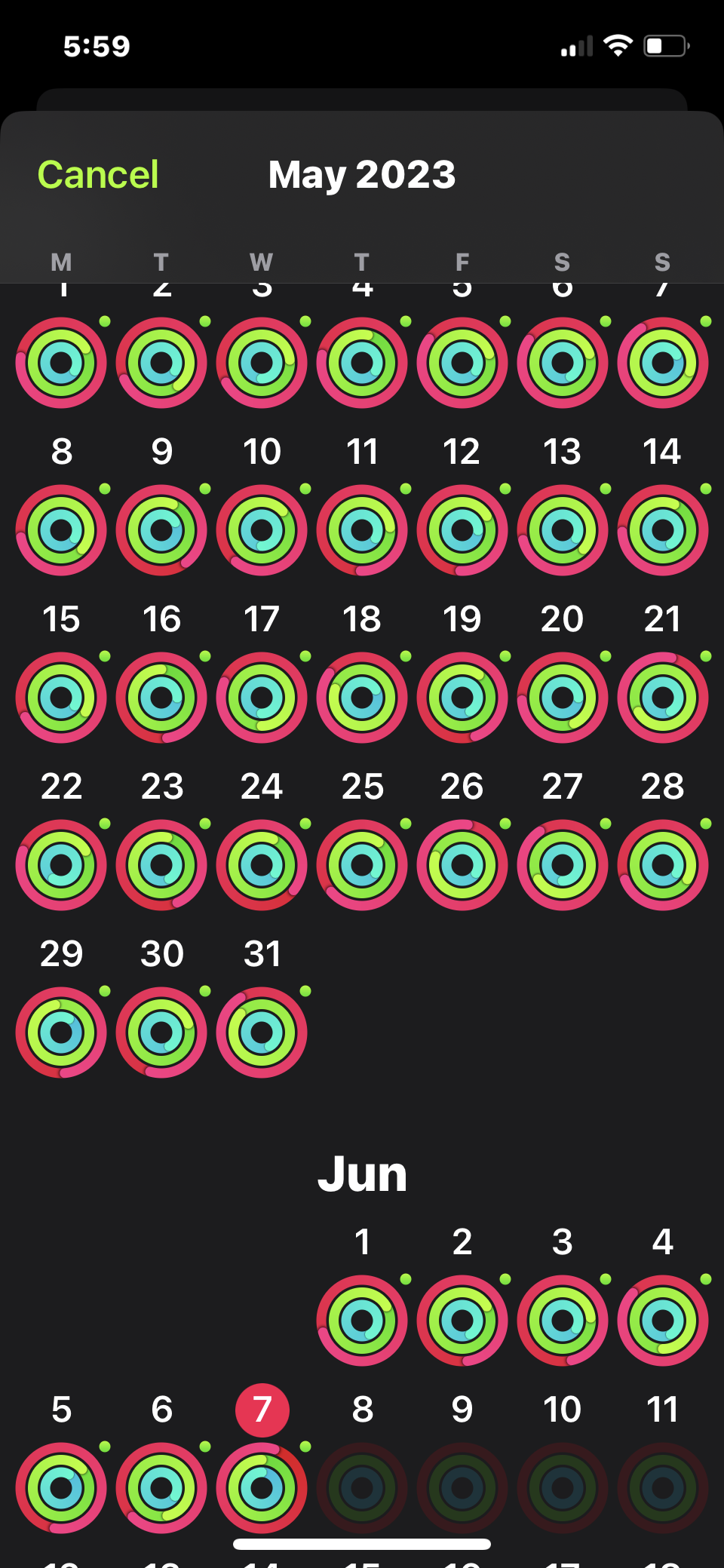
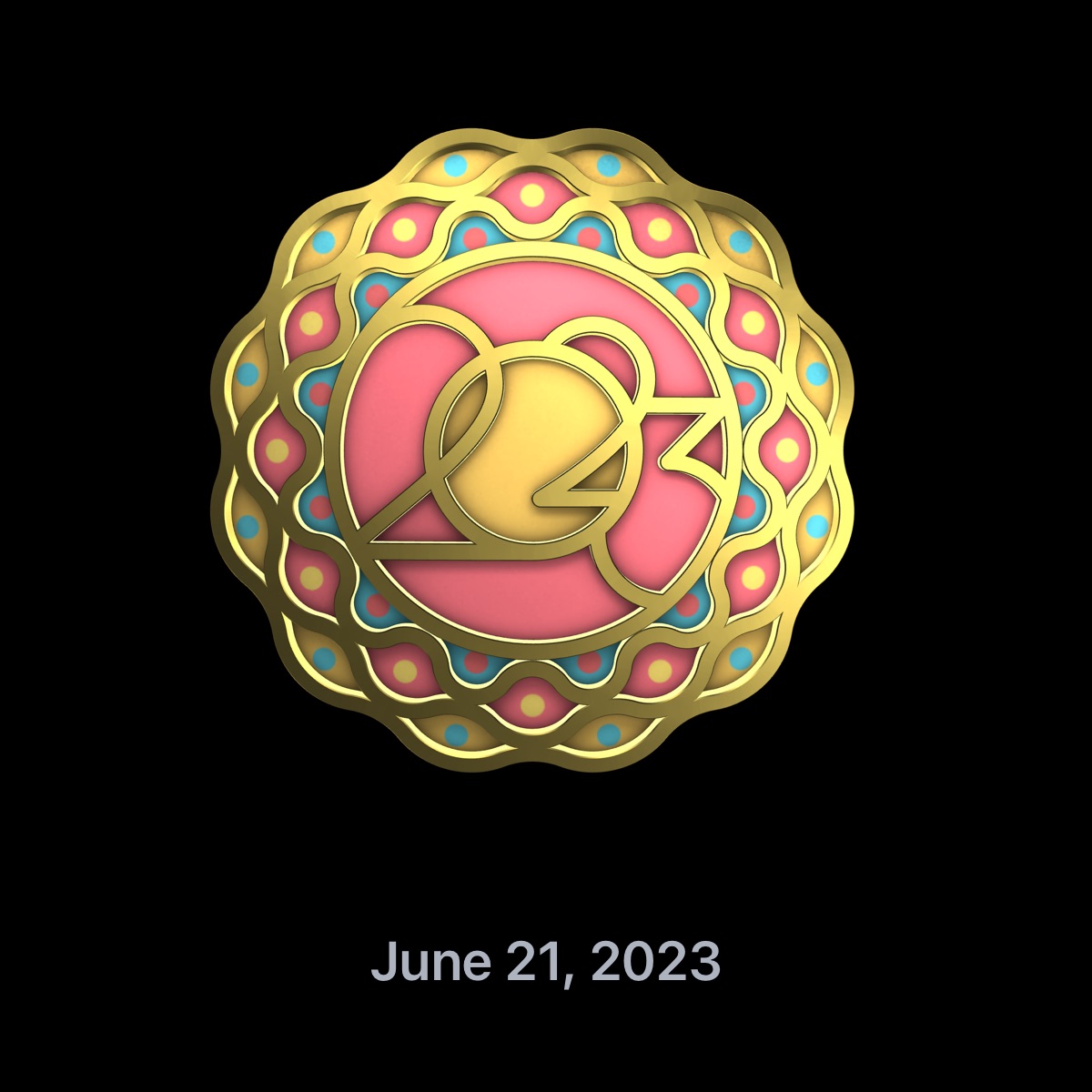
I like the colors of the pill case, and I enjoy unscrewing the top one and moving it to the bottom after taking my vitamins. This is an easy-to-do habit that gives me a little boost. I like the little pun on my lunchbox, it makes me smile. Closing the rings on my Apple Watch is very motivating to me, and I really like getting special badges. I enjoy spinning, and I like to join challenges on my Peloton. It makes me feel like I’m in a class, and the personal reward is to complete it.
All these small habits are defining who I am, and I am a person who lives a healthy lifestyle. I am not at goal (yet) but I’m already living the lifestyle. Making healthy habits both positive and visible is a game changer. Try it for yourself.
The topic of my weekly Weight Watchers meeting was, Emotional Eating, and as if right on cue, I cried when I attempted to share my thinking. It’s not that I’m struggling with emotional eating right now. On the contrary, I think I’m a lot more self-aware than I once was when it comes to this topic.
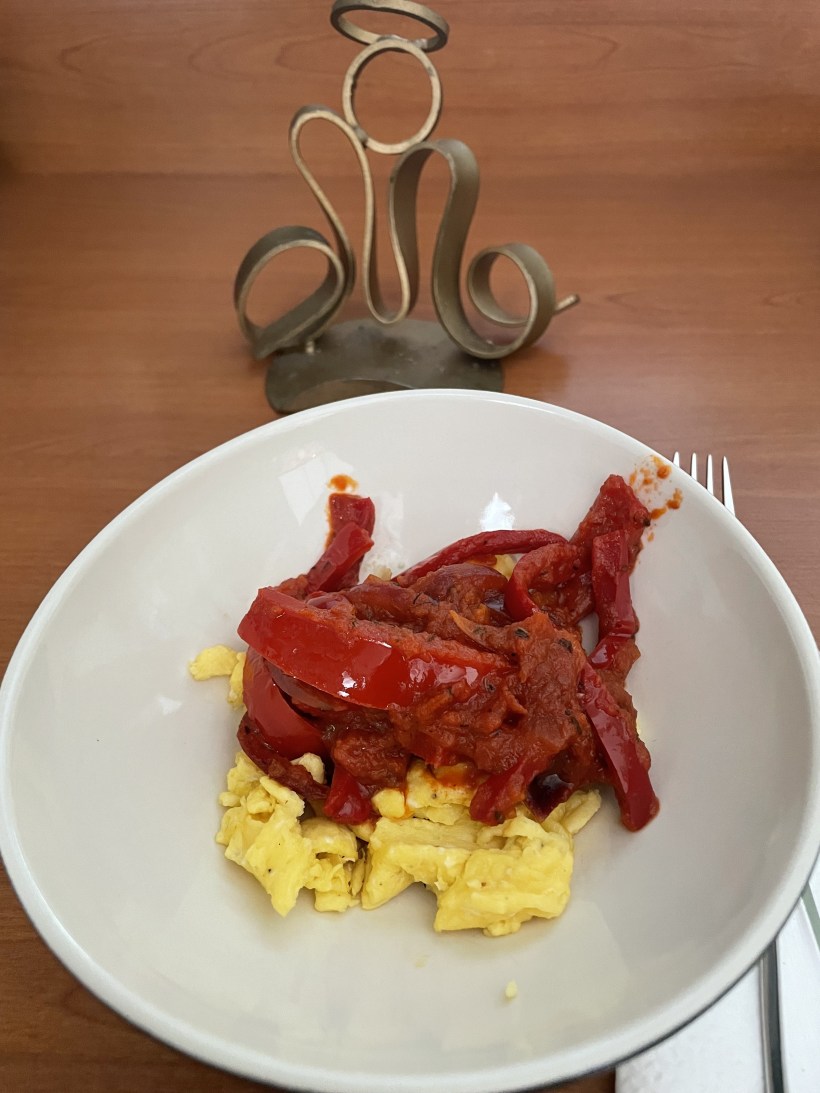
The other day, I made peppers and tomatoes over eggs because I recognized that I’d been missing my mom lately. She has been gone for nine years, she passed on August 11, 2014. She was special, and people naturally gravitated toward her because she was beautiful, smart, and hilariously funny. That is quite a combination plus – she was an amazing cook. I grew up eating good food. Now, one way I can connect with her is by cooking some of the foods she used to make me.
I don’t know why I couldn’t say all that during the meeting without tears. I suppose I must have needed a good cry, and that is the point – we need to allow ourselves to feel our feelings instead of feeding them. I’m still learning, and doing my best to continue to evolve on this journey. I hope anyone reading my posts is in a good place on theirs. But if you aren’t remember you’re not alone, and the brave thing to do if you need help is to ask for it. Thank you to my WW community for all the support and care you’ve shown me, I am all wholly better for knowing all of you.
Yesterday was a curious day and I find myself thinking about it this morning. Here is what happened, after eating a good breakfast:
(Click the link, if you want to learn how to calculate smart points)
I was very satisfied for a really long time. I kept myself pretty busy throughout the day doing errands and such. I wasn’t aware of my hunger again until 3:00 p.m. I prepared another meal of foods to pick on – an orange, 1/3 cup of shelled pistachios, and a leftover meatloaf muffin. After eating I realized I was still hungry so I ate 7 tortilla chips, Yes, I could have had some vegetables or some other lower-point option but I didn’t feel like washing, peeling, or chopping.
At 6:30 dinnertime rolled around and I ordered a thin-crust pizza and salad with chicken. The restaurant had included that pizza dough bread. I had a small slice, of pizza (I should have weighed it) a lot of salad and a piece of bread. When I looked down at my plate, I realized, there was more food on my dish than I needed.
Connecting Body & Mind
I started this morning browsing the internet for information about hunger cues, and my search led me to a term I wasn’t familiar with: interoception. What did that mean? It turns out Interoception is one of our senses and it helps us understand and feel what’s going on inside the body. So if you feel your heart beating, or are hot or cold it is your Interoceptive sense at work…
“Fascinating!” By the way, I am a big fan of Strange New Worlds check it out on Paramount Plus if you’re into Star Trek.
As it turns out this sense is what signals awareness of internal hunger cues. This makes me also think about mindful eating – it’s an attempt to get in touch with this sense. Great, I just need to fine-tune my interceptive hunger to eat more mindfully. Well, hold on, it’s not so simple,, there are 11 dimensions of interoceptive hunger that are highly idiosyncratic. So if I understand this, it means the perception of interoceptive hunger is contextual to each of us. It’s complex, and the researchers set out to answer the questions:
Are hunger sensations multidimensional?
If they are, how do people differ?
Are such hunger reports reliable?
This table shows how the study defines the multidimensional nature of interoceptive hunger. It looks like the feelings: of fatigue, irritability, or cold emptiness are moderate to strong indications of this sense:
Another finding was having more beliefs about hunger, and forms of interoceptive hunger were associated with greater uncontrolled eating. Of those, two primary signals were people who had hunger factors of being fatigued or boared tended to eat uncontrollably. People who had greater restraint presented with feelings of cold emptiness. While emotional eaters presented with feelings of irritability. And of course, interoceptive hunger was more intense for the female participants of the study. This all makes sense to me.
I am a learner, and I read these studies because I think they start important conversations and discoveries. It could be that there might be practical implications for learning more about how interoceptive hunger develops.
Having this new learning in my back pocket is already coloring how I see the Hunger Scale l I created:
Now that I know more, I think this scale can help me be aware of interoceptive hunger. During the “Gentle Hunger” phase, my body’s signals are (likely) to be different than yours. The work, if you decide to do it is to identify how your interceptive hunger presents. For me, some signals I am going to pay more careful attention to growing feelings or physical symptoms of cold or emptiness, headache, bad breath, and abdomin noises.
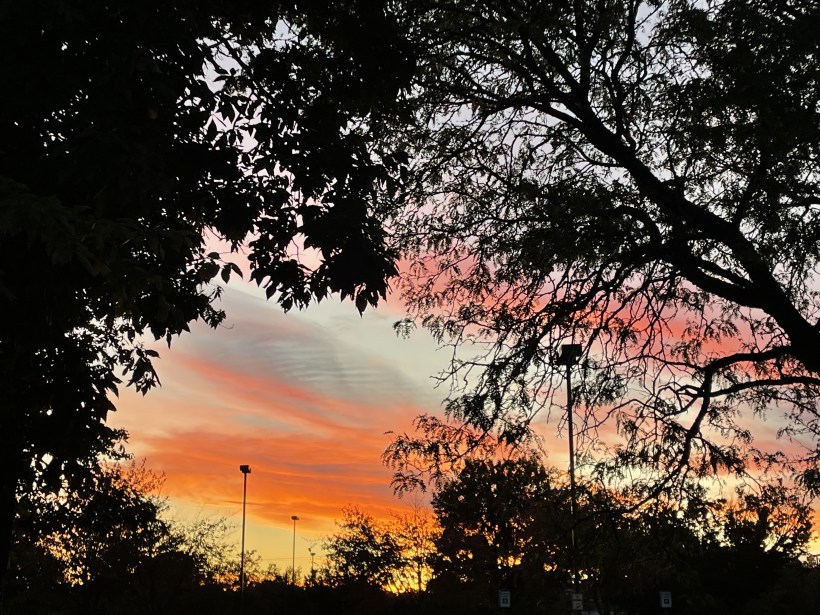
The rain has come calling on this August day. Outside rainwater is collecting on the backyard furniture until it spurts off into tiny rivers. They rush into the grooves of the table, eventually gathering back together to form micro waterfalls that plummet and splash onto the pavers below. The sun is hidden from our view as if she has left on some exotic holiday. The grass and the leaves are a healthy dark green in sharp contrast to the grey cloudy sky. Outside the world is sighing with relief for this beautiful day.
Strategy #7: Shifting Perspective to Gratitude
Having a sense of gratitude for what is right here right now is one way to maintain a positive mindset during (and beyond) a weight loss journey. I keep a Gratitude Journal where I write five things I am grateful for every day. It keeps me grounded in positivity and turns off the negative critic in my head – I told you about her already, let’s not wake her up. This is something I am doing for myself, and I find it really helpful, you may too.
This journal is my cue to write 5 things I am grateful for.
Sometimes, a weight loss journey brings real insight into how to improve a person’s quality of life. Other times, it can be fraught with disappointment and stress. I have been on the receiving end of both of those scenarios. Taking some time to reflect may be the missing piece to a weight loss puzzle. So, how is your weight journey going? Are you experiencing either of those extremes? Are you somewhere in the middle?
Right now, I am in a good place. My habits seem to be serving me well, and I am losing weight. I’ve lost, 31.5 pounds since January. Lately, I’ve been feeling a bit hungrier, so I’m making sure to eat higher-protein snacks like almonds, pistachios, or Greek yogurt. That seems to be helping, and just asking the question: “Is anything blocking my weight loss efforts?” helps me to stay flexible and responsive.
I am encouraging you to really dial into your own weight loss journey. If you are genuinely interested and approach it with some curiosity about what is (or isn’t) working engagement is sure to follow. You are worth all the effort, and I hope you never forget that as you keep moving forward through life. So let’s do this, together.
A friend sent me today’s cover image. She is traveling with her husband in their RV across the country. Driving on highways and local roads gives an intimate perspective of the land that air travel cannot give. They are experienced RVers who have done this every summer for many years. They know the ropes for how to pack, they can calculate how long it will take to get to their destination, and they know where to make reservations for the better campgrounds. They have an understanding of how this process works, and so they have clear expectations for what will happen along the way.
Knowing what to expect and having the capacity for doing what needs to be done, makes a successful journey possible. This thinking works for weight loss too. For so many of us, we know what to do to plan for successful weight loss, and yet we stop ourselves from actually taking the journey. Why? A reason might be because although we get close we never make it to the ultimate destination. Another reason might be that we reach the weight loss goal but can’t sustain it. Yet another reason may be that something significant changed in life, and now the systems to achieve a healthy lifestyle had to change.
Where are you on your weight loss journey right now? Maybe you’re all packed up and seeing the sights. Maybe you had to take a detour and are figuring out your new route. Maybe you took a pit stop and now your vehicle won’t start, you’ll need the tools to fix it. No matter where you are on your weight loss journey, please believe that you are the one who holds the keys. You are the only person who can decide what happens next to you.
When thinking about all the possible scenarios that could inhibit weight loss if you find yourself in the worst situation; like you’re stuck on the side of the road, your tire is flat and it’s raining... all is not lost. Sometimes, the best choice is to call in help from a friend. It’s true that this journey is one of self-reliance (only you can decide to take the trip) but it doesn’t mean you have to have all the answers. Sometimes the best thing you can do to get yourself moving again is to ask a friend for help.
Weight loss (or gain) is so complicated. It is a private matter, but everyone else can see it happening. There is no one right way to lose weight, yet everyone (and I mean everyone) has opinions about what is good or bad when it comes to losing weight. It’s not any better if you happen to be in a gaining weight phase. If you are gaining weight, well-meaning family or friends will try to help by calling it out. I know this is an act of love but… it is mortifying. One thing I know for sure is weight loss can only happen when you’re ready to make the change.
Many are desperate to make that change but don’t know how to get started. I speak from experience, this last go around for me felt so overwhelming at first. During one Weight Watcher meeting I said, “But the energy it takes to lose weight is just so much.” Another member, a woman I have come to really care about said, “Yeah, but what choice do you have?” Her question hung in the air as I looked down at my shoes shaking my head. Now, I think maybe her question gave me the push I needed. The choice was to either: develop my healthy habits again or just gain back ALL the weight I lost. Now you know how I answered that question, I put on my big girl pants (hahaha) and did the work to get myself back on the program.
Reading this back to myself makes my decision sound very obvious and easy. It wasn’t. Just as it’s not an easy choice to turn to surgery or medication. I can be a real worrywart when it comes to people I love, and their choices are giving me pause. I am concerned because there are real risks that come with surgery or medications. However, being obese comes with very serious consequences too. Some nagging questions that come to mind are, “Will weight loss as a result of surgery or medication be effective without putting in the time to establish strong habits to maintain the loss? Will they learn how to make healthy food choices that will maintain better health? Will they do the internal work to explore their relationships with food?” Then I think, “OK, turn those questions back on yourself.”
I have lost a lot of weight without surgery or medication, and I did gain back a significant amount since I hit my “goal” in 2018. As I said as I started this post weight loss is complicated. All of this is true, but so is this, I have maintained (at minimum) an impressive 43-pound weight loss since 2018. That isn’t nothing. I also believe in my heart, that if I hadn’t learned about how to keep healthy habits I would have surely gained it all back. The habits, plus having an incredibly supportive community to turn to have made a difference… for me.
Only you can answer the question, “When it comes to weight loss what would work for me?” There is no one right way to shed unwanted pounds, there are no guarantees, and everything comes with some risk. The only thing I can say for sure is when you make up your mind to make a change, change will happen. I believe in you, you can do this.
Does this sound familiar? It’s dinnertime, and by now the fatigue of a full day of work or activities has kicked in. You are hungry; but… good on you, you’ve done all the shopping and meal prep to produce a home-cooked meal. You’ve prepared an intentionally planned dinner designed to fit your plan. Take a bow, you’re a rock star.
Now comes the final step before you eat; it is maybe one of the most helpful things you can do on a weight loss journey and (when you’re hungry) may also be one of the biggest hassles: weigh and measure your portion.
Here are some tips to curve your hunger while preparing dinner, and some “pro-tips” to make it easier to get accurate portion sizes:
Have some veggie sticks at the ready to nosh on while you cook, this will take the edge off hunger
Stay hydrated as you cook, sip water – it helps
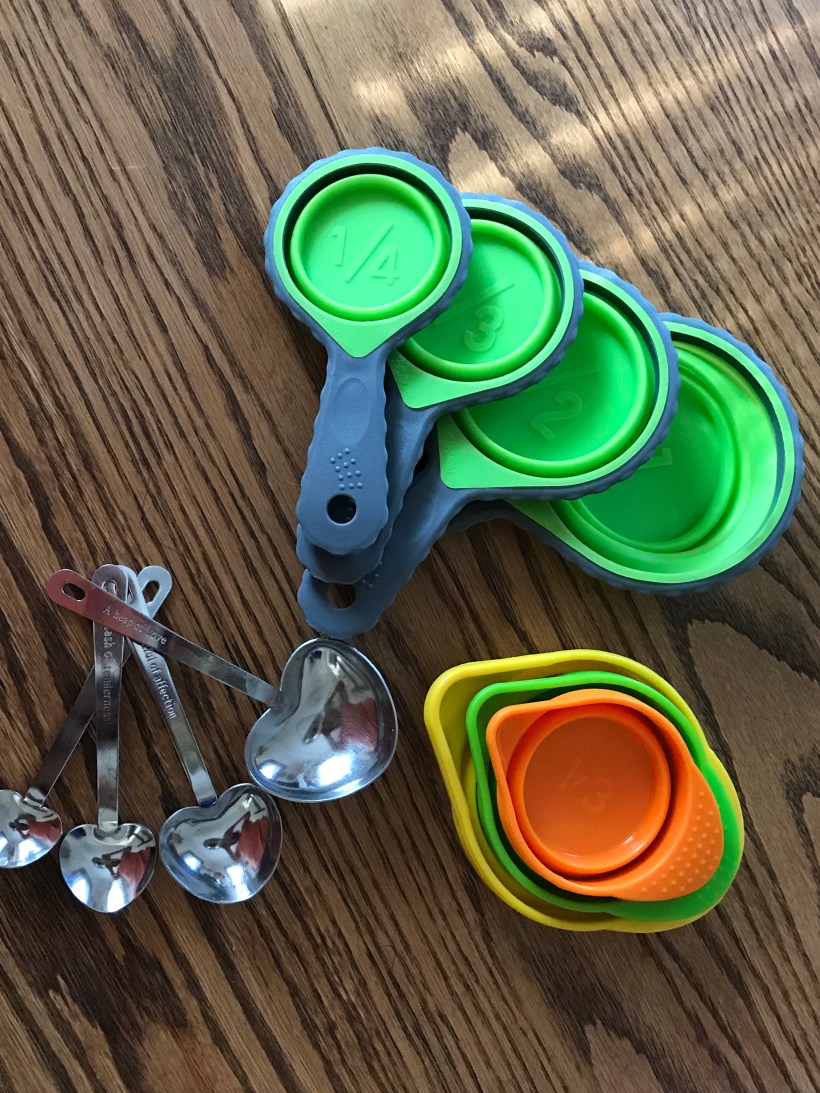
Serve dinner from the stove using measuring cups to dole out servings
Make it obvious and keep your kitchen scale next to the stove to weigh your serving
My hope for anyone reading this post is successful weight loss. If all the work has gone into meal planning and prep, then let’s all agree not to sabotage our efforts. Inaccurate portion sizes (either over or under) are not serving you well. I encourage you to do that last step, weigh and measure your portion sizes.





 “Fascinating!” By the way, I am a big fan of Strange New Worlds check it out on Paramount Plus if you’re into Star Trek.




 Getting to Goal