The Skinny on Mindful Eating

Mindful eating is an intriguing process because it has a positive impact on reducing unhealthy eating behaviors (like binge eating) and is about as effective as traditional weight loss programs (Fuentes Artiles, Staub, et al) It is also something that not everyone has tried before. Why not? For one thing, it’s kind of granola. It seems like something hippies dreamed up in an ashram

Another reason mindful eating doesn’t seem to get the attention it deserves, is who has the time? We are all living in a stressful busy world, but that stressful busy world is probably one of the reasons why you may want to lose weight. Stress packs on the pounds and we all know it. So maybe this technique is worth the time.

3 Steps for Mindful Eating

I am an enthusiastic novice, so I don’t really know anything much more than surface-level information. However, from what I can gather mindful eating consists of three important steps:

  1. Eat without any distractions, the room should be very quiet.
  2. Eat slowly, using your senses to be fully present and aware.
  3. Monitor why you’re eating and gauge satiety.

One of my daily habits is to eat one thing mindfully each day. I don’t feel like I can do a whole meal yet. Time is often an issue and I live in a house full. Eating is social, and think that is another reason why this technique is a bit tricky for many of us. So… I tried mindful eating with a chunk of watermelon today. It felt soft and released a lot of sweet liquid with each bite. It was strangely loud as I chewed it in my quiet kitchen. I still feel the coolness of it on my tongue. I was eating it as an experiment to share with you for this post. I am hungry still, I have not eaten dinner yet. That’s it. Give it a go and let me know how it went for you!

What Works for Weight Loss

Sometimes you need a little guide on the side when it comes to knowing how to begin something new. This is especially true when it comes to a weight loss journey. There are so many competing ideas, and with it being a 3.8 billion dollar industry it can be easy to get “sold” on something that won’t work for you. Here are my top ten habits that are helping me lose weight:

  1. Daily weigh-ins: this has helped me know my patterns betters and has made me less uptight about seeing “the number”
  2. Drinking 64 ounces of water each day: I notice that when I am hydrated I feel less hungry between meals.
  3. Daily exercise: when I work out I feel better, and since I enjoy spinning and I own a Peloton, it just works out.
  4. Daily food tracking: I am a Weight Watchers member, so I do all of that on my app and it really gives me the structure I need.
  5. Weigh and measure portions: I find it difficult to eyeball a serving. A food scale and measuring cups really help me. I’m not overeating or undereating I’m eating a serving and it helps.
  6. Making healthy foods obvious: it helps a lot to have grab-and-go foods for meal prep. Hard-boiled eggs, cut-up veggies, or low-point/calorie snacks bagged up can make a big difference
  7. Daily reflection for gratitude is more helpful than you’d think: if you decide to focus on all that there is to be grateful for it changes the daily story we tell ourselves. It’s important to enjoy this time on the journey and not just wait for things to get better after weight loss.
  8. If you’re a learner it’s important to intellectually engage the weight loss process: read about health and nutrition to keep your head in the game. If reading is not your bag, there are plenty of podcasts out there.
  9. Plan ahead: for me the meal that’s the hardest is dinner. I use the Paprika Recipe Manager to plan out the week. The great thing is I can send myself the grocery list on the “Reminders” app on my iPhone.
  10. Build a community: having spaces you can share with others really makes a difference. Get a friend to join you on a weight loss journey, be part of a bigger group meeting, and/or engage in virtual platforms. If you are reading this and decide to comment you are making a move to be part of a community.

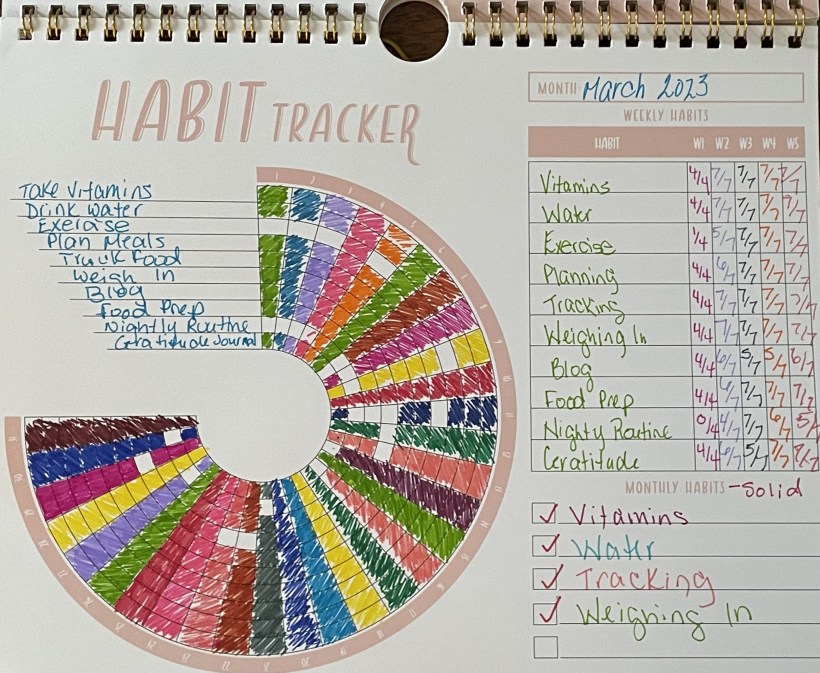
Here is a little door prize for reading today, this is a great habit tracker. Feel free to download this to try it out. If you would like one of your own here is my Getting to Goal Amazon List. You will find that and some other products that are helping me on this journey.

The Ice Cream Effect

I read this article in the Atlantic today called, NUTRITION SCIENCE’S MOST PREPOSTEROUS RESULT, which proves (much to the dismay of many Dieticians) that there is significant scientific evidence that eating a half cup of ice cream a day yields extremely positive effects on our health. Watch this interview with author, David Johns on MSNBC for a good synopsis of the article:

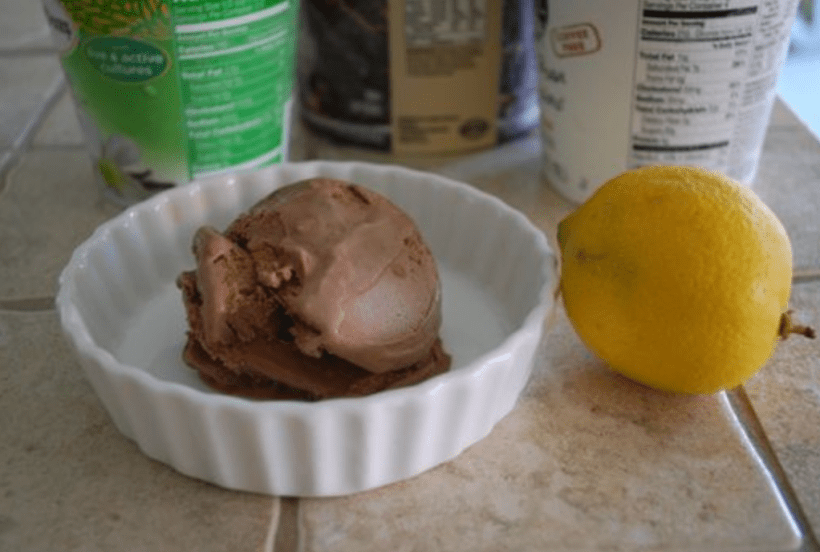
I am not suggesting that for the sake of your health, you need to go out right now and indulge in a three-scoop Friendly’s Orginal Sunday… (these were oh so good!) To be clear, a half cup of ice cream looks like this:

Thanks to: Eating Made Easy for this great comparison

I’m suggesting that there are a lot of widely held beliefs out there that can be very discouraging for people on a weight loss journey. Stick to what’s working, and keep an open mind to new thinking, even when that thinking challenges the status quo. Sometimes when something sounds too good to be true – it is actually true.

Don’t You Mind Me: Mindful Eating

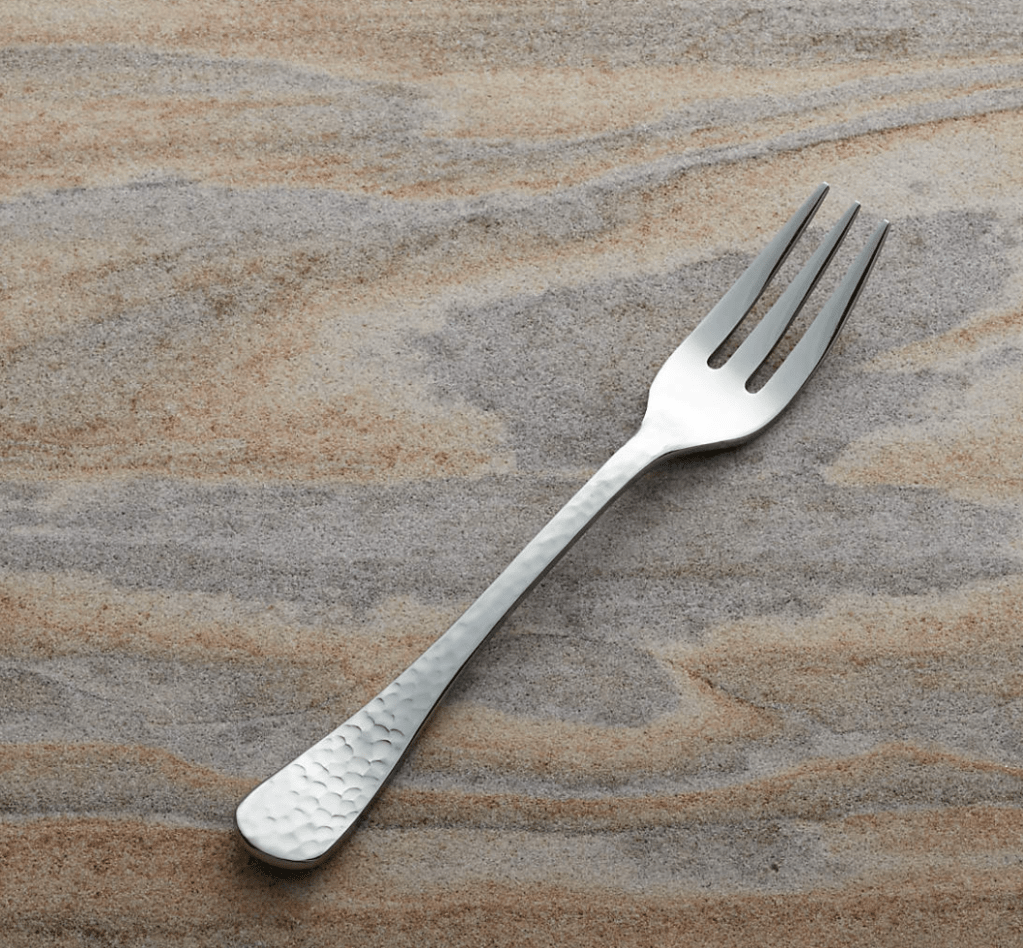
Here is a little story about my nephew, James. When he turned four he had one of those big family parties. After he made his wish and blew out the candles, it was time for ice cream cake! He took a nice big slice and proceeded to eat it with a tiny cocktail fork. Each forkful clung to the metal until some eventually spilled onto his plate. Well, of course, there were lots of “helpful adults” on hand to tell him, “You don’t eat ice cream cake with that.” To which he replied without missing a beat, “Don’t you mind me.” and promptly took his cake to eat with his more like-minded cousins. He was hilarious! But now I have to think, was he also wise?

Food is sensory and is meant to be experienced. Want a fun fact? Studies show that we eat less when we hear ourselves chew. (Brigham Young University) It’s a little weird, but it also makes sense.

So what is mindful eating? Mindful eating is an approach to eating that can be a very useful habit to establish on a weight loss journey. Harvard University’s research has shown that “mindful eating can lead to greater psychological wellbeing, increased pleasure when eating, and body satisfaction.” All I know is that when I eat something mindfully, I savor food rather than just consume it.

Sometimes I feel like a hungry lion too.

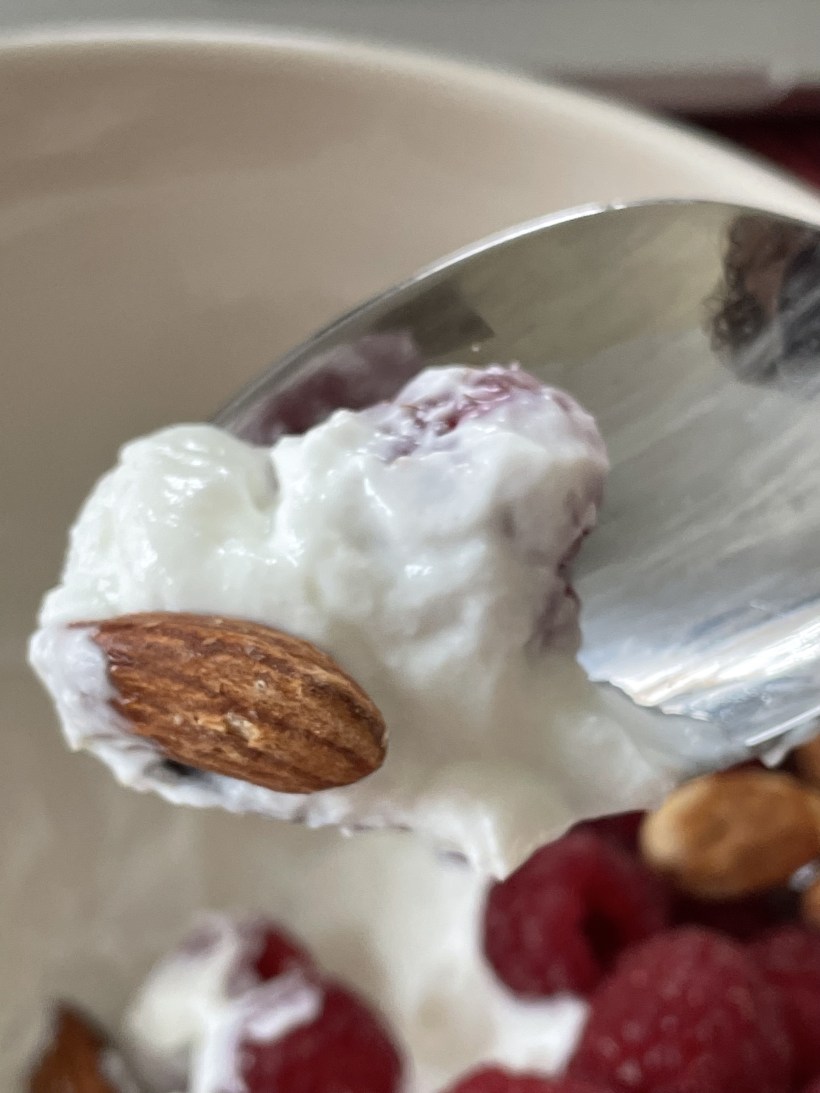
My present goal for mindful eating is to eat one thing a day mindfully. I don’t think I am ready for a whole meal this way, but I can say – I do enjoy it. I imagine where the almonds were harvested, or I name the sweet and sour notes in my Greek yogurt. Sometimes I look closely at the pistils of a raspberry in contrast to its deep red color. Here is what I try to do to set it up:

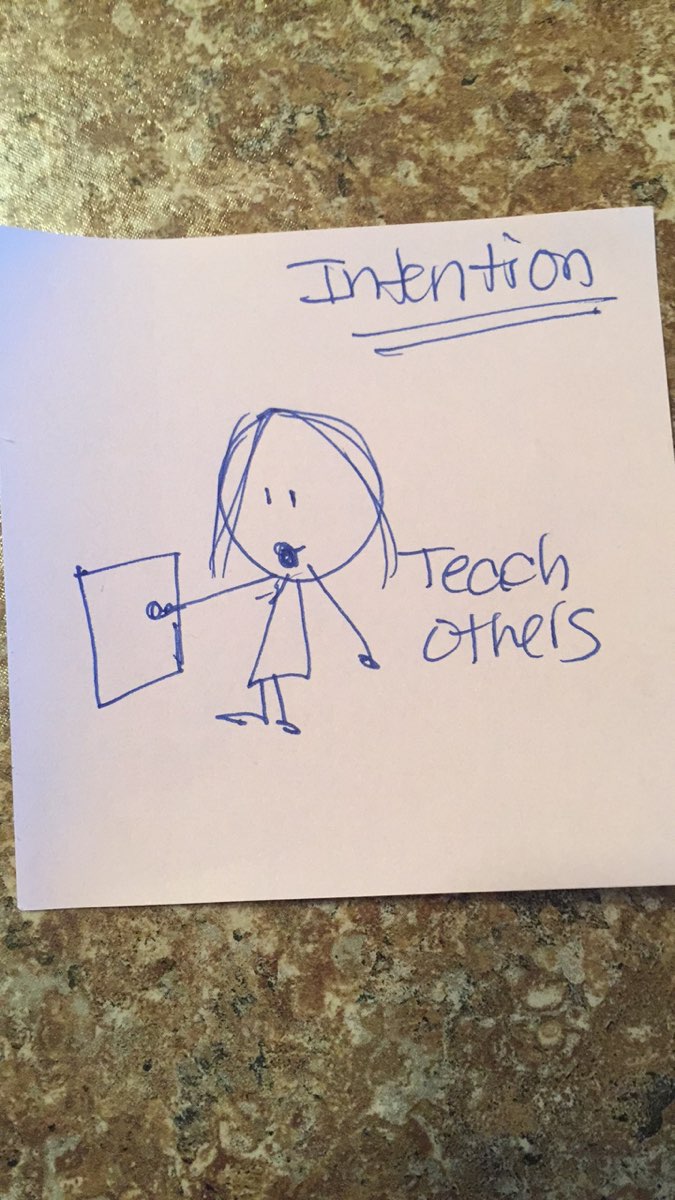
  • Be intentional with how I feel when I sit down to eat.
  • Limit outside distractions and make eating an experience.
  • As I eat focus on the sounds I make, name the colors of the food, inhale the smells, and experience the textures on my tongue.

As I close this post and Think back on my hilarious and wise nephew, James, the kid was onto something. There is no right way to eat something you really enjoy. For him, maybe that cocktail fork added a lot to the whole aesthetic of eating ice cream cake. It might be time to lose the “rules” when it comes to food, and just get carried away with the experience of eating food I really enjoy.

Alive & Kicking: Fitting in Time for Activity

More energy! More vitality! That’s the stuff that inspires a weight loss journey. Chances are good, you’ve read the phrase, “living my best life” What does that really mean? I looked it up on Google, and it’s meant to convey feeling happy and reaching one’s full potential. Well, how do we aspire to that in the day-to-day?

When I got home from work today I feel defeated and deflated. I was tired and cranky because it was a long day at school, a long commute home, and the day wasn’t even done yet. I still had so much to do! I have to: make dinner, clean up, and then lunch for tomorrow. Dear reader, in my mind’s eye, I imagine you nodding your head sympathetically, in solemn agreement. Fitting in time for an activity can be hard for some of us, but I’m here to tell you it’s not impossible. Begin by answering these three questions:

  1. What is an activity you enjoy? If you don’t like it you won’t do it.
  2. Thinking about your current lifestyle, how much time can you devote to activity? Be specific and realistic about accommodating your current schedule.
  3. What do you want to get out of this activity? Having an expectation helps reinforce engagement.

This is my reflection and how I settled on how to fit activity into my life:

  1. I really enjoy Spinning. I will do that because it’s rewarding to me.
  2. I own a Peloton, so I can do this activity daily. I can spend anywhere from 10 minutes to 45 minutes doing it. If it’s a work day I might spend 20 minutes or maybe 15 if I want to do it before leaving for work. If it’s the weekend I might spend 30 to 45 minutes doing it depending on the plans for the day. I will stagger how long I spend doing it based on what’s happening.
  3. I expect to feel physically good afterward, satisfied with my effort, and mentally calm (either burning off stress or gathering energy for what’s next).

If you really want to fit more activity into your day, give this a try. Being physical, and getting out of your head can be a real relief. I feel completely different now than I did when I came from work. Now I’m ready to keep going; so… are you ready? Let’s do this.

Be Curious!

Chances are good, that if you are reading this blog, then you are interested in weight loss, and/or improving your health. Being part of a caring community makes such a difference because you know you’re not alone there are plenty of people like you. I always say this, but then something struck me during my WW meeting this morning, even though we are all on a weight loss journey, all of our experiences are so very different.

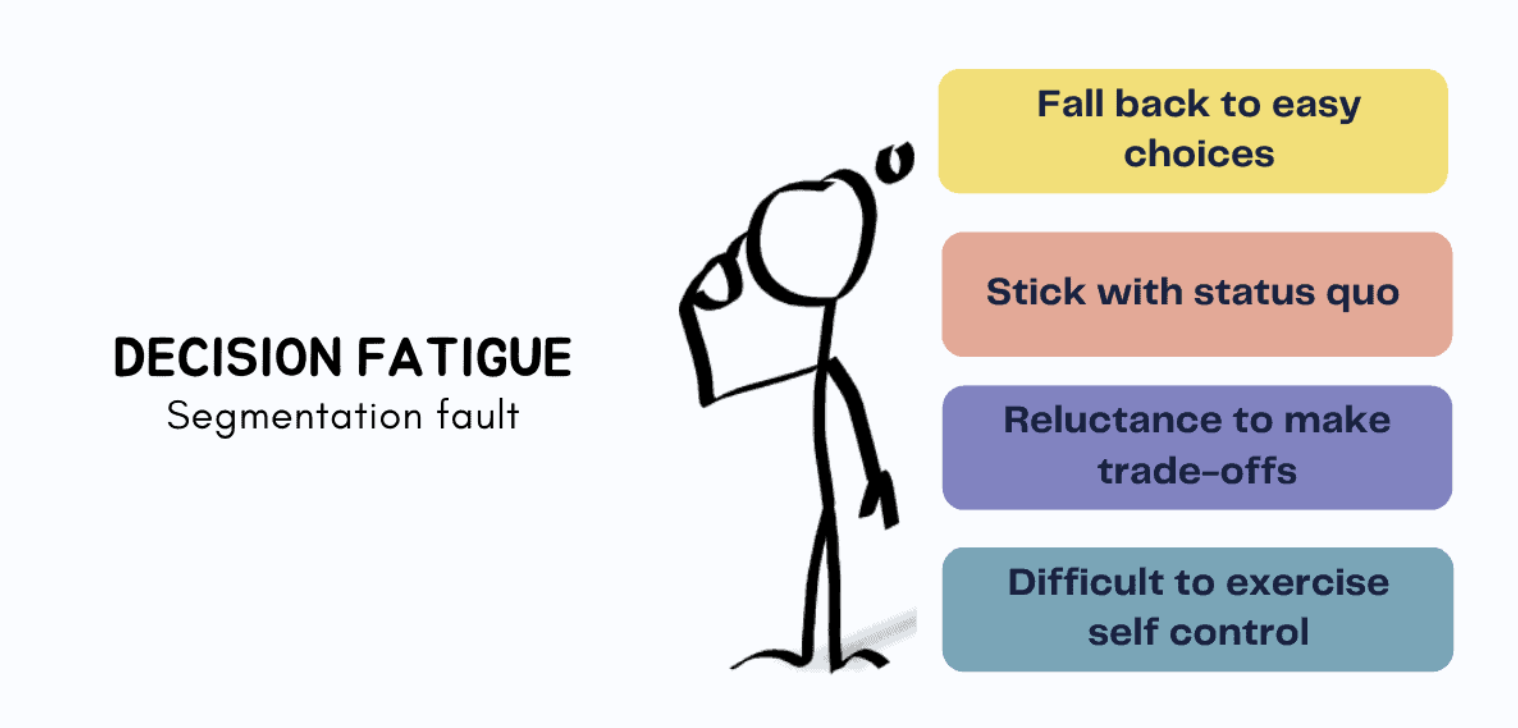
A friend next to me shared her struggles, and I could feel myself getting pulled into her story because it resonated so deeply. Her hardest meal of the day was dinner. Me too friend! But then as I listened I soon discovered my reasons are different. Dinner is a problem for me because during the workday, I make hundreds of decisions, and by the time dinner rolls around I have decision fatigue. I handle this by having a plan for dinner, Here I am sitting next to a friend who has the same problem yet my solution would be useless to her. We are the same but not the same.

Weight loss is a journey that is meant to teach us something important about ourselves. While it’s easy to relate and see yourself in others’ problems, what works for them may not work for you. What then? It may seem daunting but you need to think about yourself. A friendly way to begin is by being curious about one thing. Here are some ideas to start you off:

  1. How many nights do I eat dessert?
  2. How much sugar am I eating?
  3. How does my weight fluctuate from day to day?
  4. How can I apply what I’m learning about health/nutrition?
  5. How do I feel right before and right after a workout?
  6. How does mindful eating impact my hunger levels?
  7. How does the quality of my sleep impact motivation?
  8. How do my community/family/friends help or hinder me?
  9. What habits are or are not sticking?
  10. What would happen if I changed (…)?

Being self-aware unlocks so much of this process. Invest some time and do an inquiry into yourself. See what you learn, because there is no one in the world who is like you. You are unique and worthy of study – turn an “admiring lens” (Gravity Goldberg) on yourself and appreciate all that you are and all that you give back to the world.

A habit tracker is another great way to be curious about yourself.

Moving from Have to Get

Imagine a vintage hanging scale with two wire baskets. Inside the left basket is “have to” and inside the right is “get to” they are weighted exactly the same. One side is a mirror image of the other completely aligned in perfect symmetry. Both sides are true, and the only difference is mindset – is a “have to” or a “get to”. Think of these two statements: “I have to wake up at 5:30 am to go to spin class.” or “I get to wake up at 5:330 am to go to spin class.” Reframing that hard habit from a “have to” to a “get to” makes it more desirable, and will be more likely to stick if there is a positive belief system built around it – “I get to…”

How do we reframe a hard habit to make it more desirable? The best way I can describe it is this – it’s like a story you tell yourself. You make it into a true by the actions you take. The positive mindset that follows actually embeds a craving for it to happen.

When I wake up at 5:30 am I get to take care of myself. There is no one to distract me from my workout. I get to spend time strengthening my muscles, and improving my form on the bike. I get to feel good after and take a hot shower to start my day.

This is what reframing a hard habit might sound like
Funny but true in this case

go to spin class.” Reframing that hard habit from a “have to” to a “get to” makes it more desirable, and will be more likely to stick if there is a positive belief system built around it – “I get to…”

How do we reframe a hard habit to make it more desirable? The best way I can describe it is this – it’s like a story you tell yourself. You make it into a true by the actions you take. The positive mindset that follows actually embeds a craving for it to happen.

When I wake up at 5:30 am I get to take care of myself. There is no one to distract me from my workout. I get to spend time strengthening my muscles, and improving my form on the bike. I get to feel good after and take a hot shower to start my day.

This is what reframing a hard habit might sound like
Funny but true in this case

It’s funny, but in this case, it’s also true. What we believe influences our perception. Try it, reframe a hard habit, and see if it helps.

From Believing to Belonging

It is safe to say that just about everyone on the planet knows weight loss (or maintaining weight loss) is hard. To be successful at this you have to believe in yourself. Say it out loud, “I believe I can do this.” Now, if you have a community of others who not only hear you but also hold the same beliefs in themselves, you are on your way to something very special.

So many of these posts have been dedicated to my Saturday morning Weight Watchers group. Each week, we get up so early (our group meets at 8:15 am) on a Saturday morning to go sit in a Moose Lodge because we all get so much out of it. We share, we learn, and we belong. So many people are wise and generous, compassionate, and really vested in each other’s progress.

How do you make healthy habits stick? One way to help healthy habits stick is to create a robust culture around weight loss, and that makes it super attractive. There are norms, we all count points, we all track our foods, we all weigh and measure portions, and we believe in being accountable by weighing in on a scale. We are a community of people who share these beliefs, and we support each other on the journey.

One reason I blog is to keep that community spark going from Saturday to Saturday. I want to make it a big tent and expand that community to anyone who cares to read these posts. You are not alone, you are one of us, and we can be there to help each other through the rough times, and to celebrate the many successes you are bound to have along the way. I’m so glad you’re here.

Erasing Emotional Eating

Emotion: what comes to mind? Maybe, moody teenagers, couples in love, or is it road rage! Emotions have the power to shift perspective and focus in a way that influences energy. Love colors everyone and everything in a generous light and moving through the world feels light and free. Joy makes the energy we all possess feel like a bouncy ball, and clouds out any negative cues. On any given day, how many emotions are there? I can’t even begin to guess.

It only makes sense that emotional eating is an especially hard habit to break. Once a habit has been encoded in the brain and a shortcut link has been formed from cue to habit it becomes a very powerful response. But the good news this response is really just a habit. It’s a habit that can be broken, one that doesn’t have to (as my mother would’ve said) rule the roost. Sound good? Is it easier said than done? Well, yes, probably… but what have you got to lose except for a habit that isn’t serving you well.

The “Research Says” category name for this phenomenon is, “cue-induced wanting.” Self-control doesn’t work in the long term, we tire and succumb to the habit. So learning how to lesson this habit is in our best interest. Let’s say stress is the trigger for emotional eating.

  • Name the habit so it can be known to you: I want to eat, not because I am hungry but because I am stressed out.”
  • First, try to replace overeating with something beneficial. What you decide is up to you. Some possible options might be: walking the dog, meditation, or something creative.
  • Then if that isn’t possible, if at the moment the emotion is too hot, limit the damage. Eat low-calorie options with a big CRUNCH eat an apple, carrots, or celery. Or drink water with a straw that “emptying sound” can be very satisfying when you get to the bottom. Chances are you won’t do much damage to your weight loss efforts.

So can we really erase emotional eating? I’ll tell you, but first a story. I love to draw. Sketching that perfect line is extremely rewarding. However, I don’t always get the line perfect on my first try. Many times I’m pulling apart my gummy eraser to blot out a section of the line to make an adjustment. Changing a line’s direction, depending on how sure I was in my initial attempt, can be difficult. Sometimes even with my best efforts, I can still see traces of my misguided lines. Cue-induced wanting (stress=food) also makes deep grooves in the brain. Remember, habits are powerful – but the human spirit is a mighty force. I say yes, we can “erase” emotional overeating and make it virtually invisible, just as a heavy line on the page is erased traces of it remain upon closer inspection. Sometimes the beauty of a thing is in its imperfections.

Is it Luck, Skill, or a little of both?

Tonight was a wonderful evening of fun, family, and food. Getting together with family almost always involves lots of great food. So it was a big test for me to try out some of the techniques I have been writing about. I made sure to have lots of conversations, and I stayed away from the appetizers. The plan was to sample a couple of things and stop. I was conscious of my dinner plate, but I did overindulge on the Irish Soda break. I ate a slice of chocolate pudding pie. I maintained control and tracked all my food choices in my journal. No matter the number on the scale tomorrow, tonight was a win.